
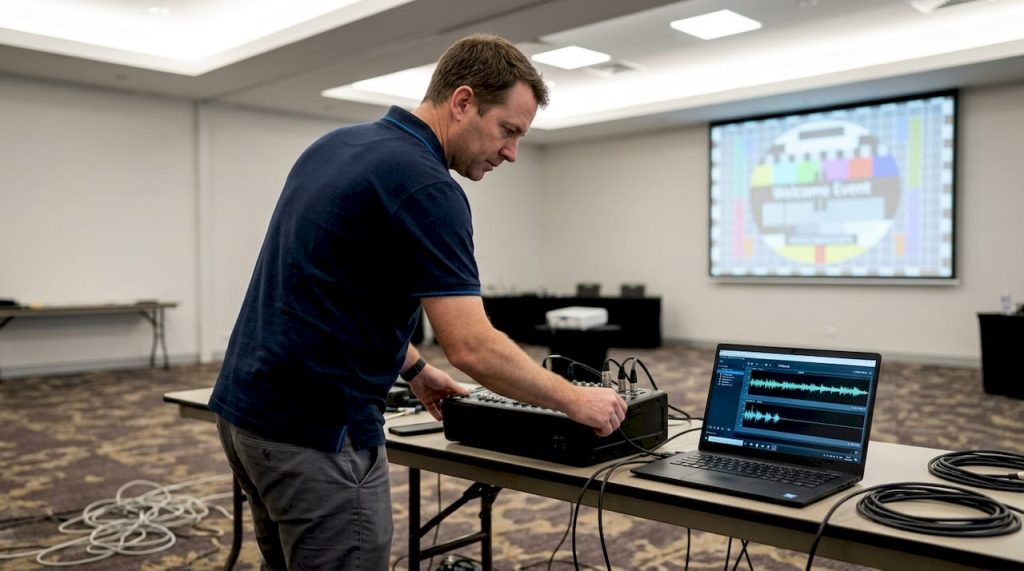
Corporate event planners often feel overwhelmed by the complexity of audio visual technology, unsure which systems are essential or how they integrate. Understanding AV fundamentals is crucial for delivering successful events that engage audiences and communicate messages effectively. This guide demystifies core AV components, explains common equipment functions, and shows how professional management ensures flawless execution. You’ll gain practical knowledge to collaborate confidently with AV providers and make informed decisions that elevate your corporate events across Australia.
Table of Contents
- Key takeaways
- Understanding the core components of AV technology
- Exploring common AV equipment and their functions
- The role of professional AV management in event success
- Customising AV solutions to match unique corporate event goals
- How our expert AV solutions can elevate your corporate event
- Frequently asked questions
Key Takeaways
| Point | Details |
|---|---|
| Core AV components | The three core systems are audio, visual and control, which must integrate to deliver professional event quality. |
| Flawless management | Professional AV management helps prevent glitches and ensures smooth execution. |
| Customising AV solutions | Tailoring AV setups to event goals boosts impact and audience engagement. |
| Vendor collaboration basics | Understanding AV fundamentals enables confident collaboration with providers and better decision making. |
Understanding the core components of AV technology
Audio visual technology comprises three fundamental systems working together to create immersive event experiences. Each component plays a distinct role, yet they must integrate seamlessly to deliver the professional quality your corporate events demand.
Audio systems form the foundation of clear communication at any corporate gathering. These include microphones for capturing speaker voices, speakers for distributing sound throughout the venue, and mixers for balancing audio levels. Wireless microphones offer presenters freedom of movement, whilst ceiling-mounted speakers ensure even sound coverage across large conference rooms. Audio mixers allow technicians to adjust volume, equalisation, and effects in real time, preventing feedback and maintaining clarity.
Visual systems deliver your message through compelling imagery and video. Projectors cast presentations onto large screens, LED video walls create stunning backdrops, and cameras capture content for live streaming or recording. Modern LED displays offer superior brightness and colour accuracy compared to traditional projectors, making them ideal for well-lit corporate venues. Cameras enable hybrid events, connecting remote participants and creating valuable content for post-event marketing.
Control systems serve as the brain of your AV setup, managing how audio and visual components interact. Switchers route video signals to different displays, whilst control panels give operators centralised management of all equipment. These systems ensure smooth transitions between presenters, manage multiple video sources, and coordinate lighting with audiovisual elements. Professional control systems prevent the technical glitches that distract audiences and undermine event credibility.
Understanding why AV solutions are essential for engaging corporate events helps you appreciate how these components work together. When properly integrated, audio, visual, and control systems create cohesive experiences that keep audiences focused on your message rather than technical limitations.
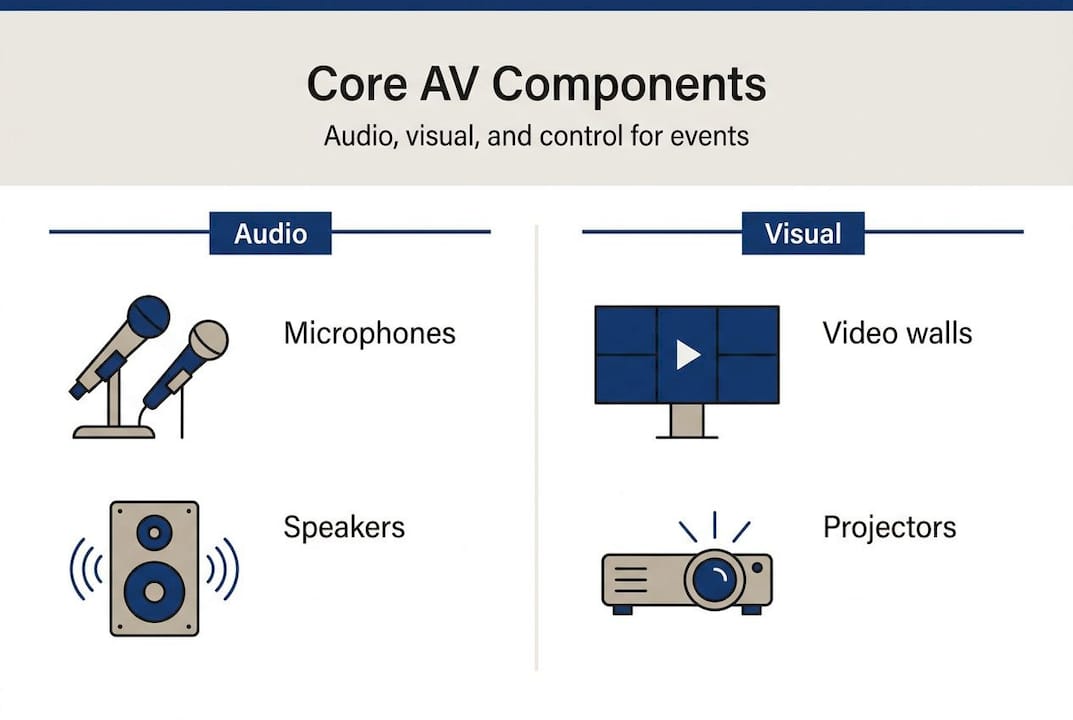
The synergy between these three core components determines your event’s success. Audio clarity ensures every word reaches your audience, visual elements reinforce key messages, and control systems orchestrate seamless transitions. Investing time to understand these fundamentals empowers you to make informed decisions when planning your next corporate event.
Exploring common AV equipment and their functions
Selecting the right AV equipment transforms good events into memorable experiences. Each piece serves specific functions, and understanding these roles helps you match technology to your event goals.
Wireless microphones come in several varieties, each suited to different presentation styles. Handheld microphones work well for panel discussions and Q&A sessions, whilst lapel microphones allow keynote speakers to move freely. Headset microphones provide hands-free operation for dynamic presenters who use gestures extensively. Modern wireless systems operate on digital frequencies, eliminating interference and ensuring reliable audio transmission throughout your venue.
LED video walls have revolutionised corporate event visuals. These modular displays create stunning, high-resolution canvases for presentations, branding, and live video feeds. Unlike projectors, LED walls maintain brightness and colour accuracy in any lighting condition. They’re particularly effective for large conferences where rear attendees need clear visibility. The flexibility of LED technology allows you to configure displays in various sizes and shapes to suit your venue architecture.
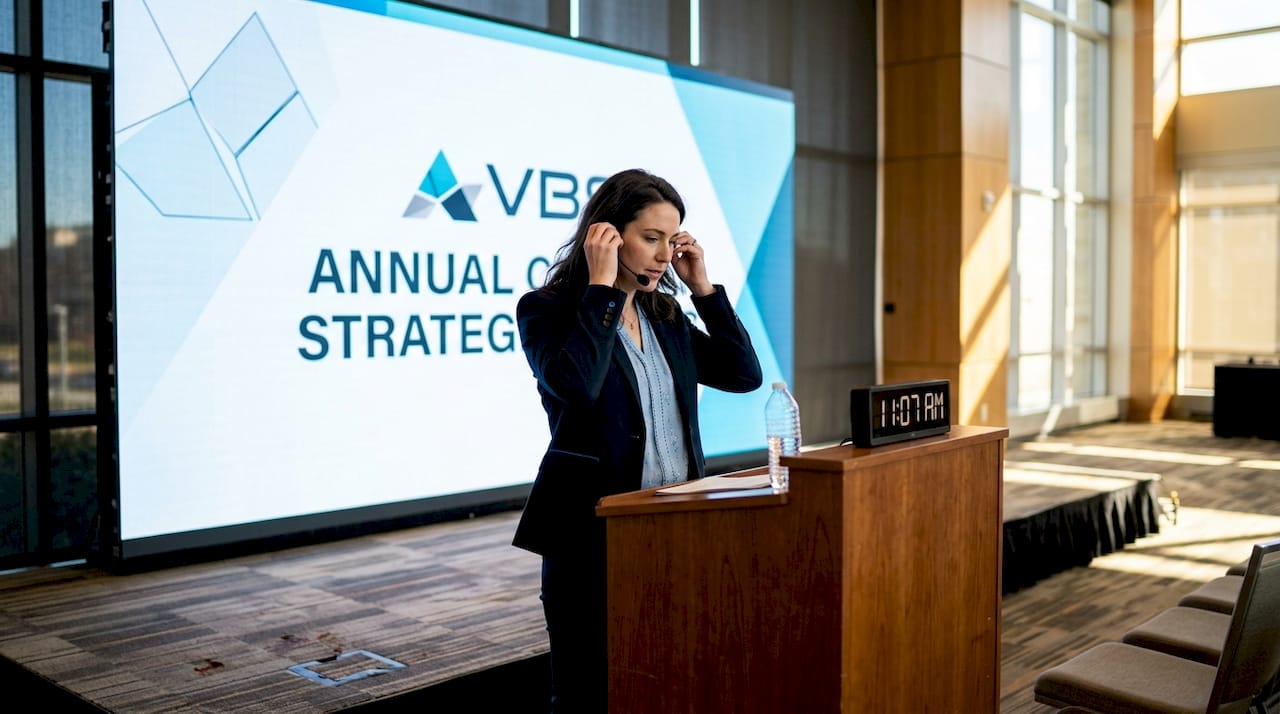
Audio mixers range from compact units for small meetings to sophisticated digital consoles for large conferences. Digital mixers offer precise control over multiple audio channels, allowing technicians to balance speaker volumes, eliminate feedback, and apply effects. They include built-in processing for echo cancellation and noise reduction, ensuring professional sound quality. Many modern mixers integrate with recording systems, enabling you to capture event audio for later distribution.
Control panels centralise management of your entire AV system. Touch-screen interfaces allow operators to switch between video sources, adjust audio levels, and control lighting from a single location. Pre-programmed scenes enable quick transitions between event segments, whilst customisable layouts accommodate unique event requirements. Advanced control systems integrate with building automation, managing room lighting and climate alongside AV equipment.
| Equipment type | Best for | Key advantage |
|---|---|---|
| Wireless lapel mic | Keynote presentations | Hands-free, natural movement |
| LED video wall | Large conferences | Brightness, visibility, impact |
| Digital mixer | Multi-speaker events | Precise audio control, recording |
| Touch control panel | Complex AV setups | Centralised management, quick transitions |
Exploring AV equipment in detail reveals how proper selection prevents technical issues and improves attendee experience. The right equipment choice depends on your venue size, audience count, and event format. Conference rooms with 50 attendees require different solutions than exhibition halls hosting 500 participants.
Pro Tip: Always test your AV equipment in the actual venue before the event day. Acoustics, lighting conditions, and physical layout significantly affect equipment performance, and advance testing allows technicians to optimise settings for your specific environment.
When you understand equipment functions, you can have productive conversations with audio visual equipment hire providers. Clear communication about your event needs ensures you receive appropriate recommendations rather than generic packages. This knowledge also helps you evaluate quotes and identify providers who truly understand corporate event requirements.
The role of professional AV management in event success
Professional AV management transforms equipment into experiences. Experienced technicians ensure flawless execution by anticipating challenges and resolving issues before they impact your event. Their expertise covers planning, coordination, and real-time troubleshooting, providing the reliability your corporate events demand.
The AV management workflow follows a structured process that maximises reliability:
- Pre-event consultation to understand your objectives, audience, and venue requirements
- Site survey to assess acoustics, sightlines, power availability, and equipment placement
- Equipment selection and configuration tailored to your specific event format
- Load-in and setup with comprehensive testing of all systems and backup protocols
- Rehearsal support to familiarise presenters with equipment and identify potential issues
- Live event operation with dedicated technicians managing audio, video, and control systems
- Real-time troubleshooting to address any technical challenges without disrupting your programme
- Load-out and post-event reporting to capture lessons for future improvements
This systematic approach eliminates the technical surprises that derail corporate events. Professional AV managers anticipate problems before they occur, maintaining backup equipment and alternative solutions for critical systems. When issues do arise, their experience enables rapid diagnosis and resolution, often before audiences notice anything amiss.
Expert technicians bring specialised knowledge that extends beyond equipment operation. They understand room acoustics, video signal flow, and the interaction between different system components. This expertise allows them to optimise audio clarity, eliminate feedback, and ensure consistent video quality across multiple displays. Their presence provides peace of mind, allowing you to focus on content and attendee engagement rather than technical details.
“The difference between adequate and exceptional corporate events often comes down to AV management quality. Professional technicians don’t just operate equipment, they orchestrate experiences that amplify your message and engage your audience.”
Following a structured AV event management process ensures nothing falls through the cracks. Detailed planning documents capture every technical requirement, whilst comprehensive checklists verify that all systems are tested and ready. This documentation also facilitates communication between your team and AV providers, ensuring everyone shares the same expectations.
Pro Tip: Schedule a technical rehearsal at least one day before your event. This allows presenters to practise with actual equipment whilst giving technicians time to fine-tune settings and resolve any compatibility issues with presentation files or video content.
Professional AV management also includes contingency planning for equipment failures or unexpected changes. Redundant systems protect critical functions like keynote presentations, whilst flexible configurations accommodate last-minute programme adjustments. This adaptability proves invaluable when corporate events face inevitable changes, ensuring technical capabilities support rather than constrain your plans.
The investment in experienced AV technicians pays dividends through improved event reliability and attendee satisfaction. Technical failures create lasting negative impressions, whilst seamless AV execution allows your content and message to shine. Professional management transforms technology from a potential liability into a powerful asset that elevates your corporate events.
Customising AV solutions to match unique corporate event goals
Generic AV setups rarely deliver the impact your corporate events deserve. Customising AV solutions significantly boosts event impact by aligning technology with strategic goals, branding requirements, and audience expectations. Tailored approaches transform standard presentations into memorable experiences that reinforce your message.
Customisation options span multiple dimensions of your AV setup. Branded visual elements incorporate your corporate colours, logos, and messaging throughout the event space. Interactive technology engages attendees through live polling, Q&A platforms, and social media integration. Specialised audio configurations adapt to different session formats, from intimate panel discussions to large keynote presentations. Lighting design creates atmosphere and directs attention, whilst video content tailored to your specific audience enhances message retention.
The benefits of customised versus generic AV solutions become clear when comparing outcomes:
| Aspect | Generic AV setup | Customised AV solution |
|---|---|---|
| Branding integration | Standard displays, minimal branding | Comprehensive brand presence across all visual elements |
| Audience engagement | Passive viewing experience | Interactive elements, live participation, social integration |
| Technical flexibility | Fixed configuration, limited adaptability | Modular systems that adjust to programme changes |
| Professional impact | Adequate but forgettable | Memorable, reinforces organisational credibility |
| Content delivery | One-size-fits-all approach | Optimised for specific message and audience |
Tailored audiovisual setups support diverse event formats, from executive briefings requiring subtle sophistication to product launches demanding dramatic impact. Customisation allows you to match technology intensity to content importance, ensuring keynote presentations receive premium treatment whilst breakout sessions maintain appropriate quality. This strategic allocation of resources maximises your AV investment by focusing capabilities where they create the greatest value.
Interactive technology represents a particularly powerful customisation opportunity. Live polling systems gather real-time feedback, transforming passive audiences into active participants. Digital signage guides attendees through complex venues, whilst mobile apps provide personalised schedules and networking opportunities. These interactive elements create engagement that extends beyond the event itself, generating valuable data and fostering ongoing connections.
Branded elements throughout your AV setup reinforce corporate identity and professionalism. Custom graphics packages for LED displays, coordinated lighting schemes, and branded stage designs create cohesive visual experiences. These elements signal attention to detail and organisational sophistication, strengthening your brand perception among attendees. The cumulative effect of consistent branding across all touchpoints amplifies your message and creates lasting impressions.
Understanding different types of AV setups helps you identify customisation opportunities that align with your specific goals. Theatre-style configurations prioritise speaker visibility and audio clarity, whilst cabaret setups facilitate table discussions with integrated microphones. Hybrid event configurations combine in-person and virtual elements, requiring specialised cameras, streaming equipment, and interactive platforms that connect both audiences.
The process of customising AV solutions begins with clear articulation of your event objectives. What messages must you communicate? How should attendees feel? What actions do you want them to take? These strategic questions guide technology selection and configuration, ensuring every element serves your broader goals rather than existing for its own sake.
Customisation also extends to attendee support and accessibility. Hearing loops assist participants with hearing impairments, whilst multiple language interpretation systems serve international audiences. Captioning services make content accessible whilst reinforcing key messages. These inclusive technologies demonstrate organisational values whilst ensuring all attendees benefit fully from your event.
How our expert AV solutions can elevate your corporate event
Planning corporate events involves countless details, and AV technology shouldn’t add stress to your workload. Our expert audio visual solutions simplify the technical complexity whilst delivering the professional quality your events demand. We combine advanced equipment with experienced technicians who understand corporate event requirements, ensuring seamless execution from planning through to pack-down.
Our comprehensive approach covers every aspect of the AV event management process, from initial consultation through to post-event support. We work closely with you to understand your objectives, recommend appropriate technology, and configure systems that align with your specific needs. Our dedicated account managers provide single-point contact, streamlining communication and ensuring nothing falls through the cracks.
Whether you’re planning an intimate executive briefing or a large-scale conference, our venue audio visual solutions adapt to your requirements. We maintain extensive equipment inventories, allowing us to scale capabilities to match your event size and format. Our technicians bring years of corporate event experience, anticipating challenges and delivering the reliability that protects your professional reputation. Partner with us to transform your next corporate event into an engaging, memorable experience that achieves your strategic goals.
Frequently asked questions
What is the difference between audio visual technology and conference AV?
Audio visual technology is a broad term encompassing all equipment and systems that produce, process, or display sound and images. Conference AV specifically refers to AV services and equipment tailored for conferences and corporate events, focusing on presentation support, audience engagement, and professional communication. Conference AV providers specialise in corporate requirements like multi-presenter coordination, hybrid event capabilities, and reliable execution under time-sensitive conditions.
How do I choose the right AV equipment for my corporate event?
Start by assessing your event format, audience size, and venue characteristics. Consider whether you need simple presentation support or complex multi-room coordination. Consulting professional AV providers for tailored recommendations ensures you receive equipment appropriate to your specific needs. Experienced providers evaluate your objectives, venue acoustics, and technical requirements to suggest optimal solutions rather than generic packages.
What are the benefits of hiring professional AV management?
Professional AV management ensures technical reliability through expert planning, setup, and operation. Experienced technicians manage complex equipment, troubleshoot issues in real time, and maintain backup systems that prevent disruptions. Their expertise allows you to focus on content and attendee engagement rather than technical details. Professional management also includes pre-event testing, rehearsal support, and post-event reporting that captures lessons for future improvements.
Can AV technology support hybrid corporate events?
Modern AV systems excel at connecting in-person and virtual audiences through specialised equipment and platforms. High-quality cameras capture presenters and content, whilst streaming technology delivers professional broadcasts to remote participants. Interactive platforms enable virtual attendees to ask questions, participate in polls, and network with in-person guests. Professional AV providers configure systems that create cohesive experiences for both audience segments, ensuring remote participants feel included rather than peripheral.
How far in advance should I book AV services for my corporate event?
Book AV services as early as possible, ideally when you confirm your venue. Early booking ensures equipment availability and allows adequate time for planning, site surveys, and customisation. Complex events requiring specialised equipment or extensive customisation benefit from longer lead times. Most professional providers recommend booking at least 8-12 weeks in advance for large conferences, though they can often accommodate shorter timeframes for smaller events with standard requirements.