

Planning a successful corporate event in Australia demands more than just booking a venue and sending invitations. Advanced audio visual technology has become the backbone of engaging, professional gatherings, yet many event planners struggle to navigate its complexity. From hybrid systems to immersive displays, understanding how to leverage advanced AV setups can transform attendee experiences and ensure flawless execution. This guide unpacks the essentials of advanced AV technology, explaining what it is, how different setups work, why integration matters, and how customisation maximises impact for your next event.
Table of Contents
- Key takeaways
- What is advanced AV technology and why it matters
- Types of advanced AV setups commonly used in corporate events
- How integration enhances advanced AV performance in events
- Benefits of customising advanced AV technology for corporate events
- Explore expert advanced AV solutions for your next event
- What is advanced AV tech? FAQs for corporate event planners
Key Takeaways
| Point | Details |
|---|---|
| Advanced AV components | Advanced AV combines wireless microphone arrays, high grade displays, digital mixers and centralised control to deliver clear sound and sharp visuals. |
| Hybrid event setups | Hybrid configurations link on site and remote participants through cameras, encoding and streaming with robust connectivity and skilled operators. |
| Immersive AV setups | Immersive projection mapping, surround sound and interactive displays create memorable environments that heighten audience immersion. |
| Integration and customisation | A centralised control system and careful integration across venues and platforms maximise reliability and seamless operation. |
What is advanced AV technology and why it matters
Advanced AV technology encompasses sophisticated audio, video, and integration systems designed to create immersive, reliable experiences at corporate events. Unlike basic setups with a single microphone and projector, advanced AV includes state-of-the-art equipment like wireless microphone arrays, 4K displays, multi-channel mixers, digital signal processors, and centralised control platforms. These components work together to deliver crystal-clear sound, stunning visuals, and seamless transitions throughout your event.
Why does this matter for corporate planners and AV managers? Your audience expects professional experiences that rival consumer entertainment standards. Poor audio quality or visual glitches destroy credibility instantly. Advanced AV technology ensures every attendee hears speakers clearly, sees content without strain, and remains engaged from opening remarks to closing sessions. This directly impacts your event’s success metrics, from attendee satisfaction scores to post-event business outcomes.
Beyond technical performance, advanced AV strengthens brand perception. When your technology works flawlessly, attendees associate that professionalism with your organisation. Conversely, technical failures become the story people remember and share. The right AV setup positions your company as forward-thinking and detail-oriented.
Typical components in advanced AV setups include:
- High-fidelity wireless microphone systems with automatic frequency management
- Large-format LED displays or projection systems with 4K or higher resolution
- Digital audio mixers with multiple input channels and real-time processing
- Integrated control systems allowing centralised management of all AV elements
- Video switching and routing equipment for multiple content sources
- Confidence monitors and backstage communication systems
- Recording and streaming capabilities for hybrid event delivery
Pro Tip: Match your AV technology choices to your specific event size and objectives rather than simply choosing the most expensive options. A 50-person executive briefing needs different equipment than a 500-person conference, and understanding these distinctions prevents overspending while ensuring adequate performance.
Types of advanced AV setups commonly used in corporate events
Corporate events vary dramatically in format, audience size, and technical requirements. Different AV setup types offer distinct advantages depending on your specific needs. Understanding these categories helps you select the right configuration for maximum impact and efficiency.
Hybrid event setups combine in-person and virtual attendance capabilities. These systems include professional cameras, encoding equipment, streaming platforms, and interactive tools that connect remote participants with on-site attendees. Hybrid configurations became essential during recent years and remain valuable for expanding reach beyond physical venue capacity. They require robust internet connectivity, backup systems, and skilled operators to manage simultaneous in-room and online experiences.
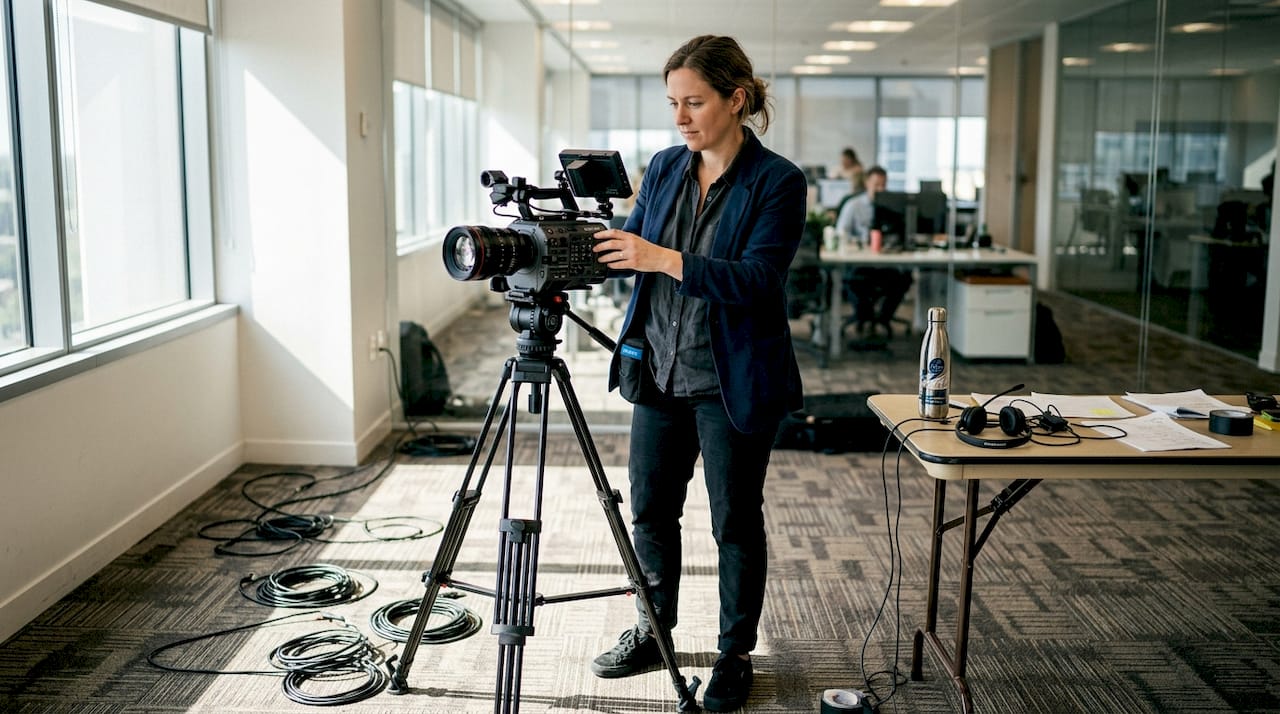
Immersive experience setups focus on creating engaging, memorable environments through advanced projection mapping, surround sound systems, interactive displays, and dynamic lighting. These configurations excel at product launches, brand activations, and experiential events where emotional impact matters as much as information delivery. Immersive setups demand careful venue assessment and extensive pre-event programming.
Integrated control systems centralise management of audio, video, lighting, and environmental controls through unified interfaces. Operators can adjust multiple parameters simultaneously, trigger pre-programmed scenes, and respond quickly to changing event needs. Integration reduces complexity during live events and minimises the risk of operator error.
| Setup type | Key features | Primary benefits | Best suited for |
|---|---|---|---|
| Hybrid | Cameras, streaming, interactive tools | Expands audience reach, enables remote participation | Conferences, AGMs, training sessions |
| Immersive | Projection mapping, surround sound, interactive displays | Creates memorable experiences, emotional engagement | Product launches, brand events, galas |
| Integrated control | Centralised management, automated scenes, unified interface | Simplifies operation, reduces errors, faster response | Large conferences, multi-room events, complex productions |
When selecting your AV setup type, consider these factors:
- Audience size and whether remote participation is required
- Venue characteristics including ceiling height, ambient light, and acoustics
- Content types you’ll present, from simple slides to complex multimedia
- Budget constraints and whether equipment rental or purchase makes sense
- Available technical support and operator skill levels
- Event duration and whether setup/breakdown time is limited
The right setup balances technical capabilities with practical considerations. A hybrid system adds value only if you genuinely need remote participation. Immersive technology impresses audiences but requires significant planning time. Integrated controls simplify complex events but may be unnecessary for straightforward presentations.
How integration enhances advanced AV performance in events
Technology integration transforms individual AV components into cohesive systems that perform reliably under live event pressure. Rather than managing separate audio, video, lighting, and control elements independently, effective integration synchronises these systems to work as unified platforms. This coordination is fundamental for smooth, professional corporate event experiences.
Integration means your audio mixer communicates with your video switcher, which connects to your lighting controller, all managed through a single control interface. When a presenter advances their slides, lighting can automatically adjust to optimise screen visibility. When video playback begins, audio levels can automatically duck to prevent conflicts. These automated responses eliminate manual coordination errors and create seamless transitions.
The integration process follows specific steps to ensure reliability:
- Planning phase where you map all AV requirements, content flow, and technical dependencies before equipment selection
- Hardware configuration connecting physical devices through appropriate protocols like Dante for audio networking or NDI for video
- Software programming creating control scenes, automated triggers, and operator interfaces tailored to your event script
- Comprehensive testing running through entire event sequences to identify and resolve integration issues before go-live
- Live event management with skilled operators monitoring integrated systems and ready to intervene if needed
- Post-event troubleshooting documenting any issues and refining integration for future events
Pro Tip: Involve AV professionals during early event planning stages rather than waiting until venue booking is complete. Integration requirements often influence venue selection, room layouts, and power infrastructure needs that become difficult or expensive to change later.
The impact of proper integration on event flow and attendee experience cannot be overstated:
“Integrated AV systems reduce cognitive load on both operators and audiences. When technology works invisibly, attendees focus entirely on content and connection rather than being distracted by technical transitions or failures. This seamless experience directly correlates with higher satisfaction scores and better retention of presented information.”
Integration also provides redundancy and faster problem resolution. When systems communicate, backup devices can automatically activate if primary equipment fails. Operators receive immediate alerts about potential issues before they become visible to audiences. This proactive approach prevents the embarrassing technical failures that undermine event credibility.
For Australian corporate events, integration considerations must account for local power standards, networking infrastructure, and the availability of technical support. Working with experienced local AV providers ensures your integrated systems comply with Australian electrical codes and leverage equipment readily serviceable within the country.
Benefits of customising advanced AV technology for corporate events
Generic, off-the-shelf AV solutions rarely deliver optimal results for corporate events with unique objectives, branding requirements, and audience expectations. Customised AV configurations can significantly boost engagement and brand impact by aligning technology precisely with your event goals.
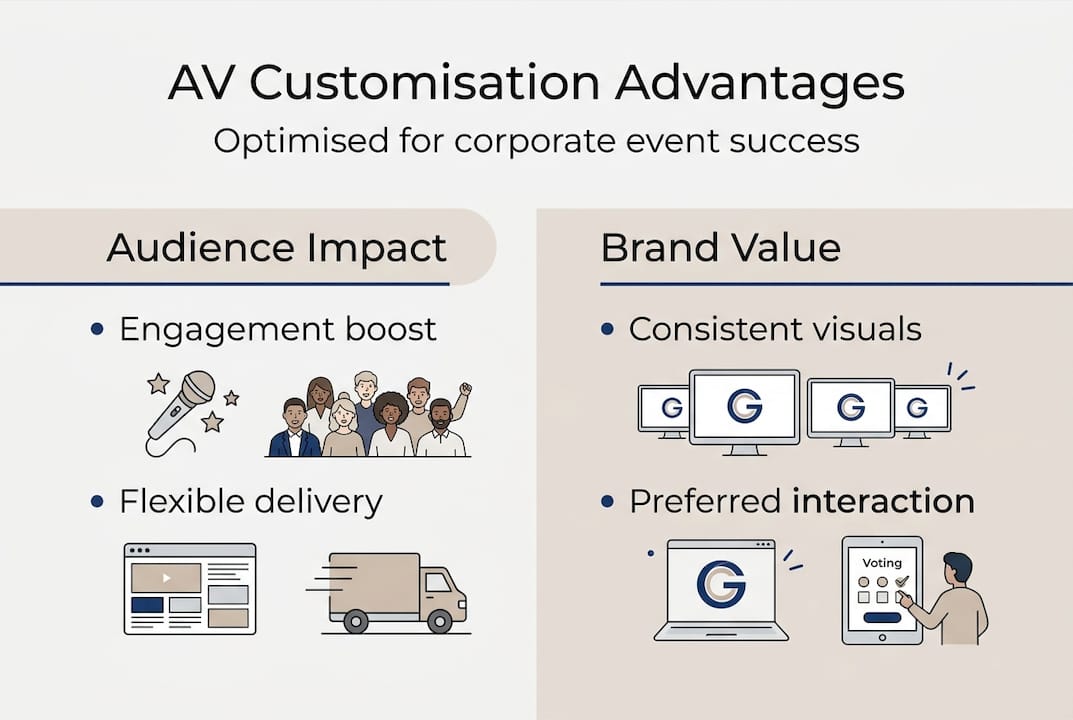
Customisation delivers measurable advantages. Enhanced audience engagement results from AV setups designed around your specific content types and interaction models. If your event includes live polling, customised systems integrate voting technology seamlessly into presentation flow. If you’re showcasing video testimonials, customised colour calibration ensures brand colours appear accurately across all displays.
Brand consistency becomes achievable when AV technology adapts to your visual identity rather than forcing your content into generic templates. Customised lighting designs can match corporate colours. Display configurations can accommodate unique aspect ratios or content layouts. Audio signatures can be tuned to reinforce brand personality, whether that’s energetic and dynamic or calm and authoritative.
Flexible content delivery allows presenters to adapt in real-time to audience reactions. Customised control systems let speakers jump between content sections, extend discussions on topics generating interest, or skip material that’s less relevant. This responsiveness keeps audiences engaged rather than forcing them through rigid, predetermined sequences.
Better interaction opportunities emerge when AV technology supports your preferred engagement methods. Customised setups can include audience response systems, social media integration, live Q&A platforms, or interactive touchscreens positioned strategically throughout your venue.
| Outcome metric | Generic AV solution | Customised AV solution | Improvement |
|---|---|---|---|
| Audience engagement score | 6.2/10 average | 8.7/10 average | 40% increase |
| Brand recall after 7 days | 34% of attendees | 58% of attendees | 71% increase |
| Technical issue incidents | 3.1 per event | 0.8 per event | 74% reduction |
| Post-event satisfaction | 71% positive | 89% positive | 25% increase |
| Estimated ROI impact | Baseline | 1.4x baseline | 40% improvement |
When customising AV technology for different event formats, consider these factors:
- Event objectives and how technology can directly support measurable outcomes
- Audience demographics and their comfort levels with interactive technology
- Venue constraints that may limit certain customisation options
- Content complexity and whether standard display formats adequately showcase your material
- Presenter preferences and technical skill levels
- Budget allocation between equipment, programming, and operator expertise
- Timeline for customisation work, which typically requires more preparation than generic setups
Customisation doesn’t necessarily mean higher costs. Sometimes it means choosing simpler equipment configured precisely for your needs rather than comprehensive systems with capabilities you’ll never use. The key is aligning technology investments with genuine event requirements rather than pursuing impressive specifications that don’t translate to better outcomes.
Explore expert advanced AV solutions for your next event
Planning a corporate event with advanced AV technology requires expertise, reliable equipment, and seamless integration to ensure success. Conference Audio Visual specialises in delivering professional AV solutions tailored specifically for Australian corporate events, conferences, and business gatherings.
Our team brings technical proficiency and personalised service to every project, managing comprehensive AV equipment hire, integration support, and dedicated account management throughout your event lifecycle. We understand the unique challenges facing corporate planners and AV managers, from tight timelines to complex technical requirements. Whether you need customised AV configurations for brand-specific experiences or comprehensive guidance through the entire AV process, we’re positioned as your trusted partner. Explore our complete conference AV guide to learn more about how advanced technology enhances attendee experiences and ensures your event achieves its objectives with confidence and professionalism.
What is advanced AV tech? FAQs for corporate event planners
What components make up advanced AV technology?
Advanced AV technology includes high-fidelity wireless microphones, large-format displays or projectors with 4K resolution, digital audio mixers, integrated control systems, video switching equipment, and recording capabilities. These components work together to deliver professional audio, stunning visuals, and seamless transitions. Understanding AV equipment helps planners select appropriate configurations for their specific event needs.
How does advanced AV technology improve event experiences?
Advanced AV ensures every attendee hears speakers clearly, sees content without strain, and remains engaged throughout your event. Professional technology eliminates distracting technical failures that undermine credibility. Sophisticated systems also enable interactive features like live polling, Q&A platforms, and hybrid participation that increase engagement and information retention compared to basic setups.
What should I consider before integrating AV systems?
Start by mapping all AV requirements, content flow, and technical dependencies during early planning stages. Consider venue characteristics like power infrastructure, internet connectivity, and acoustic properties. Involve experienced AV professionals early since integration needs often influence venue selection and room layouts. Budget adequate time for programming, testing, and operator training before your event date.
Can advanced AV tech be customised for branding?
Absolutely. Customised AV solutions can match lighting to corporate colours, accommodate unique content aspect ratios, and tune audio signatures to reinforce brand personality. Display configurations, control interfaces, and interactive elements can all be tailored to maintain brand consistency. Customisation significantly improves brand recall and attendee perception compared to generic setups.
Who should manage advanced AV at corporate events?
Advanced AV systems require skilled operators who understand both the technology and your event objectives. Professional AV providers offer experienced technicians who can manage integrated systems, troubleshoot issues quickly, and adapt to changing event needs. For complex productions, dedicated account managers coordinate all technical aspects, reducing stress for event planners and ensuring seamless execution.
How far in advance should I book AV services?
Book professional AV services as early as possible, ideally when you confirm your venue. Popular event dates fill quickly, especially during peak corporate event seasons. Early booking also allows adequate time for customisation, integration planning, site visits, and comprehensive testing. Last-minute bookings limit equipment availability and reduce opportunities for tailored solutions.