

Professional AV strategies can boost corporate event ROI by up to 40%, yet many planners still treat audio as an afterthought. Quality sound directly shapes attendee satisfaction, message retention, and networking outcomes at corporate gatherings. This guide reveals how strategic audio solutions transform event success, covering technical essentials, common challenges, and practical budgeting strategies that Australian event planners can implement immediately to elevate their next conference or business event.
Table of Contents
- Key takeaways
- The impact of professional audio on event success
- Technical essentials of high-fidelity audio for events
- Common audio challenges and professional solutions
- Budgeting and partnering for optimal audio outcomes
- Discover expert audio visual solutions for your next corporate event
- FAQ
Key Takeaways
| Point | Details |
|---|---|
| ROI uplift | Strategic audio strategies can lift corporate event ROI by up to 40 percent and improve attendee satisfaction and networking outcomes. |
| High fidelity benefits | High fidelity audio strengthens message retention and reduces cognitive load for attendees at corporate events. |
| Setup essentials | A professional setup includes venue specific acoustic analysis, redundancy and microphone selection tailored to the format to prevent failures. |
| Budget and local partners | Allocating budget to AV and partnering with local specialists enhances engagement and overall event outcomes. |
The impact of professional audio on event success
Audio quality directly determines whether your corporate event achieves its business objectives. Strategic audiovisual integration boosts corporate event ROI by up to 40%, increases attendee satisfaction by 42%, and improves networking outcomes by 35%. These aren’t marginal gains. They represent the difference between an event that merely happens and one that drives measurable business value.
Australian corporate planners who customise AV solutions boost event impact by addressing venue-specific acoustic challenges and tailoring equipment to audience size and format. When attendees can hear every word clearly without straining, they engage more deeply with content, participate actively in discussions, and form stronger professional connections. Poor audio, conversely, creates cognitive fatigue that diminishes focus and reduces the perceived value of your event.
Many planners underestimate audio’s role, assuming basic PA systems suffice for any venue. This misconception costs organisations thousands in lost engagement and diminished ROI. Professional audio management ensures consistent coverage, eliminates distracting technical issues, and creates an immersive environment where your message resonates. Partnering with specialists who understand Australian venue acoustics and offer affordable AV installations Melbourne wide transforms audio from a technical necessity into a strategic advantage.
“Quality audio isn’t just about volume. It’s about creating an acoustic environment where every attendee, regardless of seating position, receives the same high-fidelity experience that keeps them engaged and focused on your content.”
Key factors that distinguish professional audio setups:
- Venue-specific acoustic analysis and equipment calibration
- Redundant systems that prevent technical failures during critical moments
- Tailored microphone selection matching speaker styles and event formats
- Real-time monitoring and adjustment by experienced audio engineers
Technical essentials of high-fidelity audio for events
Achieving professional audio quality requires understanding specific technical parameters that directly affect message clarity and attendee comfort. High-fidelity audio requires 80Hz-15kHz frequency response and low total harmonic distortion (THD), achieving -14 to -18 LUFS for clear message retention. These specifications aren’t arbitrary. They represent the acoustic range where human speech and presentation audio deliver maximum intelligibility without listener fatigue.
Frequency response determines how accurately your audio system reproduces sound across the audible spectrum. Corporate events need systems that handle the 80 Hz to 15 kHz range effectively, capturing the fundamental frequencies of human speech (typically 85-255 Hz for male voices, 165-255 Hz for female voices) plus the harmonics that add clarity and presence. Systems with inadequate frequency response create muffled or tinny sound that forces attendees to work harder to understand content.
Total harmonic distortion measures how much a system alters the original audio signal. Professional setups maintain THD below 0.1%, ensuring clean reproduction without the harshness or muddiness that higher distortion introduces. LUFS (Loudness Units relative to Full Scale) levels between -14 and -18 provide consistent loudness that’s comfortable for extended listening without requiring constant volume adjustments or causing ear fatigue.
| Technical Parameter | Optimal Range | Impact on Experience |
|---|---|---|
| Frequency Response | 80 Hz – 15 kHz | Captures full speech intelligibility and presence |
| Total Harmonic Distortion | < 0.1% | Ensures clean, undistorted sound reproduction |
| LUFS Level | -14 to -18 | Balances loudness for comfort without fatigue |
| Speaker Transmission Index | ≥ 0.6 | Guarantees speech clarity in all seating areas |
These technical specifications translate directly into business outcomes. When you understand AV equipment explained for corporate contexts, you can specify systems that enhance message retention and reduce the cognitive load that poor audio creates. Attendees remember content better and rate events higher when audio quality meets these professional standards.
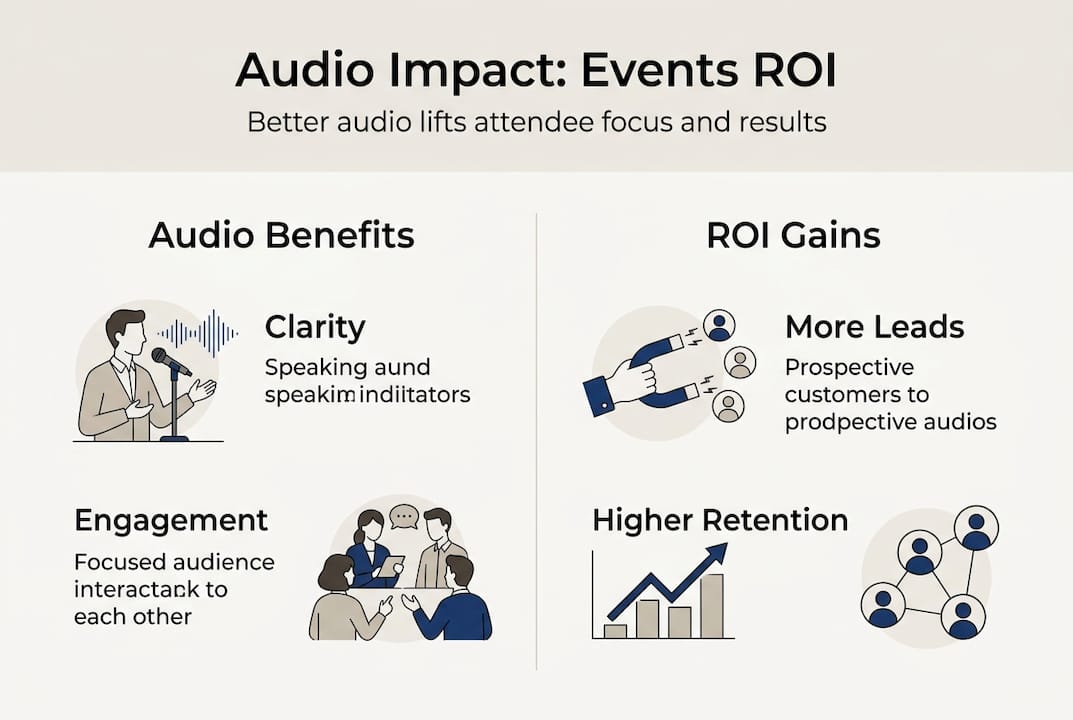
Selecting appropriate audio visual setups for corporate events means matching equipment capabilities to your venue characteristics and audience size. A 200-person conference in a carpeted hotel ballroom requires different acoustic treatment than a 500-person presentation in a high-ceiling exhibition hall.
Pro Tip: Calibrate your sound system for the specific room size and audience density at least two hours before doors open. Empty rooms sound dramatically different than full ones, as bodies absorb high frequencies. Professional audio engineers adjust EQ curves and volume levels based on expected attendance to ensure optimal sound quality when your event begins.
- Match speaker power and coverage patterns to venue dimensions
- Position speakers to minimise reflections from hard surfaces
- Use acoustic treatment or strategic placement to control reverberation
- Test audio from multiple seating positions, especially rear and balcony areas
Common audio challenges and professional solutions
Corporate events face predictable audio problems that professional techniques effectively prevent. Audio challenges like feedback and poor coverage are solved by backups, EQ adjustments, and front fills, while hybrid events require separate room and stream mixes to reduce latency. Understanding these challenges and their solutions helps planners specify requirements and evaluate AV partners effectively.
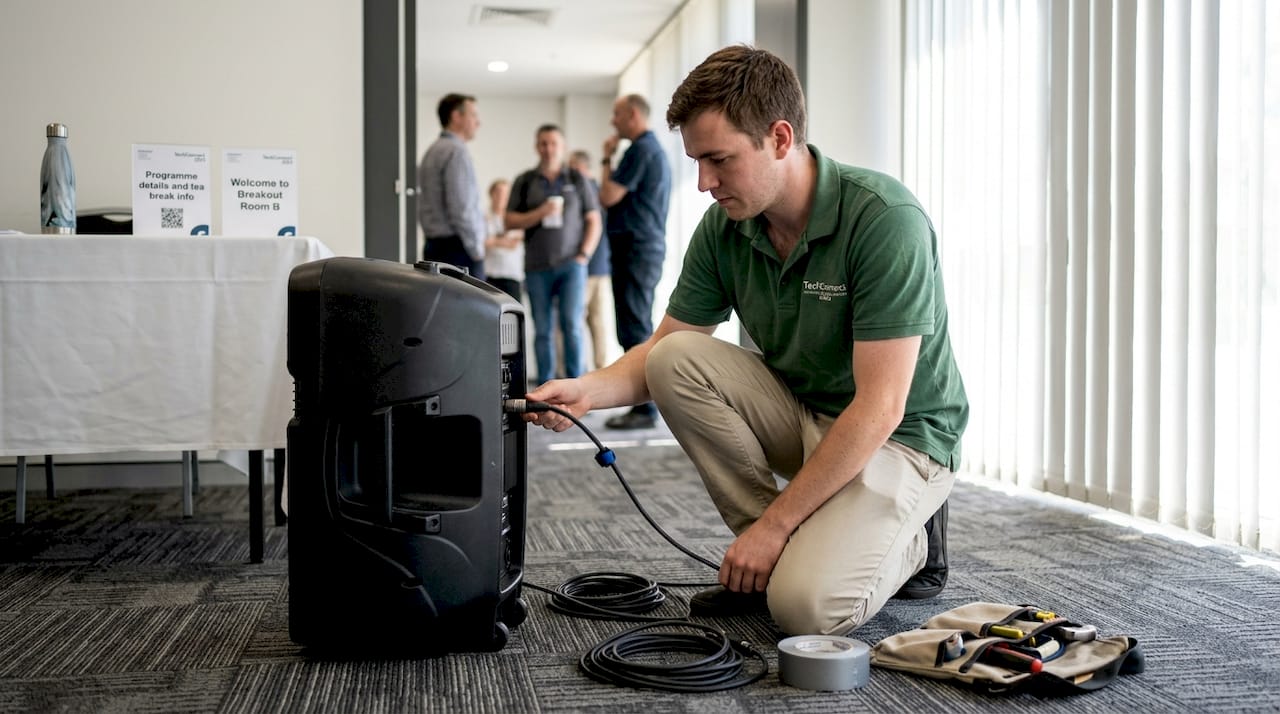
Feedback occurs when microphones pick up sound from speakers, creating that distinctive screech that disrupts presentations. Professional systems prevent feedback through strategic microphone placement, directional mic selection, and EQ notching that removes problematic frequencies without affecting speech clarity. Redundant systems ensure that if one microphone or speaker fails, backup equipment seamlessly takes over without interrupting your event.
Coverage gaps create zones where attendees struggle to hear clearly, particularly in balcony sections or at the rear of large venues. Upgrading to line arrays and front fills eliminated complaints around poor balcony coverage in Australian venues, achieving speaker transmission index (STI) of 0.6 or higher. Front fill speakers direct sound to areas the main PA system can’t reach effectively, ensuring every seat receives consistent audio quality.
Hybrid events introduce latency challenges when remote participants hear room audio delayed or distorted through streaming platforms. Professional solutions include creating separate audio mixes optimised for in-room and streaming audiences, implementing paced Q&A sessions that account for transmission delays, and using dedicated streaming encoders that minimise latency. Conducting thorough pre-event tests of your streaming setup prevents surprises during live presentations.
| Challenge | Professional Solution | Expected Outcome |
|---|---|---|
| Microphone feedback | Directional mics, strategic placement, EQ notching | Clean audio without disruptive screeching |
| Equipment dropouts | Redundant PA systems and backup microphones | Seamless continuity if primary systems fail |
| Poor balcony coverage | Front fill speakers and line array upgrades | Consistent clarity in all seating areas |
| Hybrid event latency | Separate room and stream mixes, paced Q&A | Synchronised experience for all attendees |
When you choose the right PA system with professional guidance, you address these challenges proactively rather than troubleshooting during your event. The AV event management process includes comprehensive site surveys, acoustic analysis, and equipment testing that identify potential problems before they affect attendees.
Pro Tip: Schedule streaming tests from multiple Australian locations at least 48 hours before your hybrid event. Internet performance varies by region and time of day. Testing from Melbourne, Sydney, and Brisbane connections reveals bandwidth limitations and latency issues you can address before going live.
Key practices that prevent audio problems:
- Conduct thorough sound checks with all presenters using their actual microphones
- Position confidence monitors away from microphones to prevent feedback loops
- Use wireless mic systems with frequency coordination to avoid dropouts
- Deploy audio engineers who actively monitor and adjust levels throughout your event
Budgeting and partnering for optimal audio outcomes
Strategic budget allocation and partner selection directly determine audio quality and event success. Australian corporate planners should allocate 15-20% of their event budget to AV services to achieve 32% higher attendee engagement by partnering with local AV experts familiar with venue acoustics. This investment delivers measurable returns through improved satisfaction scores, stronger networking outcomes, and enhanced message retention.
Many organisations underinvest in audio, allocating 5-8% of budgets to AV and wondering why attendees report poor experiences. Professional audio requires quality equipment, experienced technicians, and sufficient setup time. Cutting corners on AV to fund catering or décor undermines your event’s core purpose: delivering content that engages and informs your audience.
Partnering with Australian AV providers who understand local venue characteristics offers distinct advantages. Acoustic properties vary dramatically between Sydney’s modern conference centres, Melbourne’s heritage venues, and Brisbane’s convention facilities. Local experts bring venue-specific knowledge that ensures optimal equipment selection and placement. They also provide faster response times for last-minute changes and technical support during your event.
Effective budgeting and vendor selection process:
- Define your event format, audience size, and technical requirements early
- Request detailed quotes from at least three local AV providers with corporate experience
- Evaluate proposals based on equipment specifications, redundancy plans, and technician expertise
- Verify vendor familiarity with your specific venue through references and past projects
- Include contingency funds (10-15% of AV budget) for day-of adjustments and enhancements
- Schedule comprehensive planning meetings to align audio setup with presentation formats
When you master the AV event management process, you understand how audio integrates with lighting, video, and staging to create cohesive experiences. Effective planning considers how presenters will move, where audience interaction occurs, and how hybrid components connect. This holistic approach ensures audio supports rather than constrains your event design.
Understanding why to use AV solutions for engaging corporate events helps justify budget allocations to stakeholders. Present audio investment as a strategic enabler of event objectives rather than a technical expense. Frame proposals around business outcomes: improved message delivery, higher attendee satisfaction, enhanced brand perception, and measurable ROI increases.
“The difference between adequate and exceptional audio often costs less than you’d expect, but the impact on attendee experience and event success is profound. Smart planners invest in professional audio knowing it directly influences every other aspect of their event.”
Pro Tip: Include contingency funds specifically for audio adjustments discovered during final sound checks. Venue acoustics can surprise even experienced professionals, and having budget flexibility allows immediate solutions rather than accepting suboptimal sound quality.
Considerations when selecting AV partners:
- Verify experience with your event format (keynotes, panels, hybrid, networking)
- Confirm equipment inventory matches your technical requirements
- Assess responsiveness and communication quality during proposal phase
- Review recent projects at similar venues and audience sizes
Discover expert audio visual solutions for your next corporate event
Transforming audio strategy from concept to reality requires partnering with specialists who understand both technical requirements and business objectives. Conference Audio Visual delivers comprehensive audio visual solutions tailored specifically for Australian corporate events, combining advanced equipment with venue-specific expertise that ensures flawless execution.
Our AV event management process begins with detailed consultation to understand your event goals, audience profile, and technical requirements. We conduct thorough venue assessments, design customised audio setups, and provide experienced technicians who actively manage sound quality throughout your event. From initial planning through final pack-down, we handle every technical detail so you can focus on content and attendee experience.
Flexible audio visual equipment hire options provide access to professional-grade systems without capital investment, while dedicated account managers ensure personalised support and seamless coordination. Whether you’re planning an intimate executive briefing or a large-scale conference, our solutions scale to meet your specific needs.
Pro Tip: Engage AV partners at least six weeks before your event to secure optimal equipment availability and allow sufficient planning time. Early consultation enables thorough technical design and prevents last-minute compromises that affect audio quality.
FAQ
What are the key audio factors that affect corporate event engagement?
Clarity, coverage, feedback control, and sound quality directly influence how attendees engage with content. Proper microphone selection matched to speaker styles and room-tailored audio setup ensure every participant hears presentations clearly without distraction. When audio quality meets professional standards, attendees focus on content rather than straining to understand words.
How can hybrid events handle audio challenges effectively?
Use separate audio mixes optimised for in-room and streaming audiences to manage different acoustic requirements. Implement paced Q&A sessions that account for streaming latency, typically 3-5 seconds, so remote participants can engage meaningfully. Conduct extensive pre-event sound checks and streaming tests from multiple locations to identify and resolve technical issues before going live.
What percentage of an event budget should be allocated to audio visual services?
Allocating 15-20% of your total event budget to AV services provides the investment needed for professional audio quality that drives engagement. This allocation enables quality equipment, experienced technicians, and sufficient setup time. Events that meet this benchmark achieve 32% higher attendee engagement and measurably better satisfaction scores than those that underinvest in audio.
What are common audio problems at events and how can they be prevented?
Feedback, equipment dropouts, and poor coverage in balcony or rear seating areas represent the most frequent challenges. Prevent these issues through redundant PA systems that provide backup if primary equipment fails, EQ adjustments that eliminate problematic frequencies, and front fill speakers that direct sound to coverage gaps. Professional audio engineers identify and address potential problems during comprehensive pre-event testing.